
Dementia Detective: Turning Confusion into Care with Empathy and Observation
by Anita Srivastava on 4/15/2025
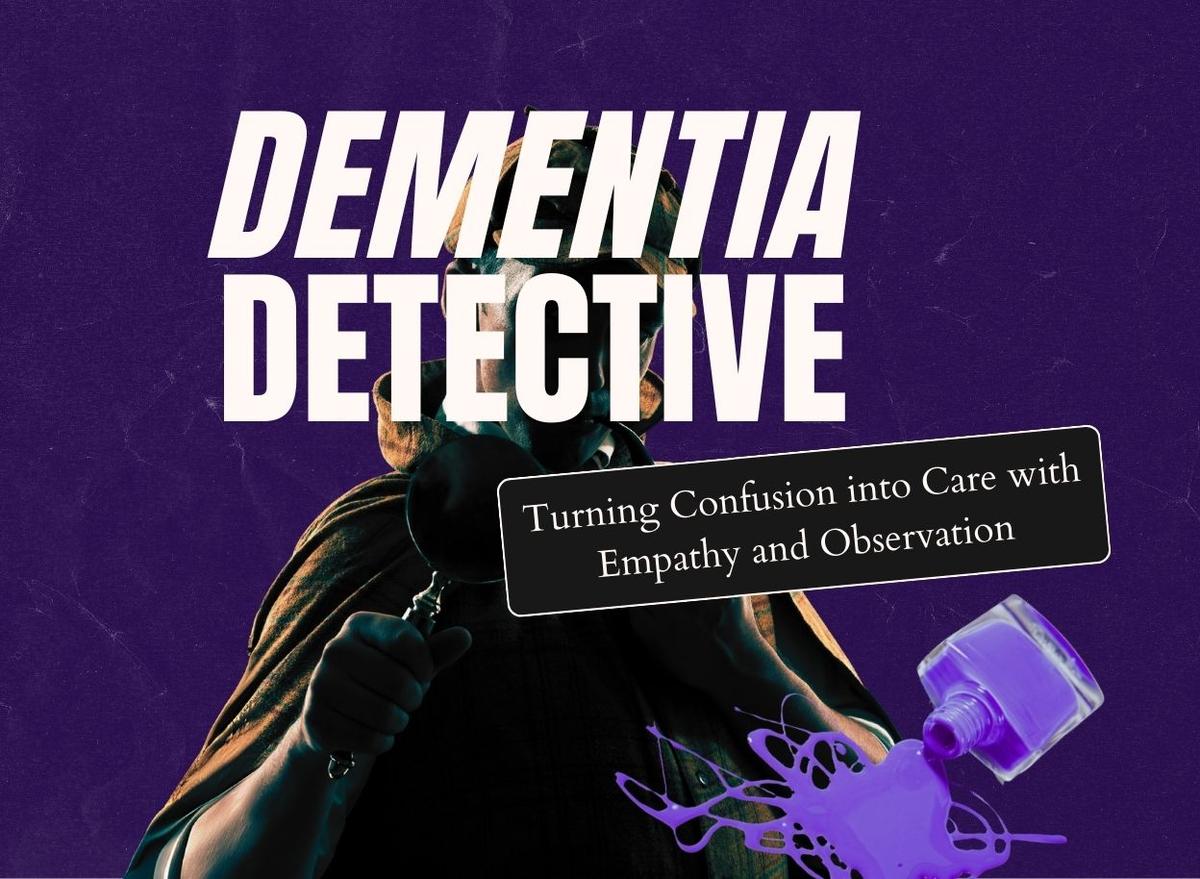
Alternate Title: The Failed Case of Grandma and The Nail Polish
Sometimes the way our loved ones communicate with dementia can be... confusing. Between work, family, and the constant worry, we sometimes don’t have the space to think clearly. I’ve had stress and exhaustion cloud my judgment and I wanted to share my story so you can learn from my missed opportunities.
My grandma started showing signs of dementia towards the last few years of her life. She was always an early riser and would always make breakfast but one day she began to wake up in the middle of the night and start rummaging around the kitchen aimlessly. We were worried and didn’t immediately think it was dementia but one day when she turned the stove on at 3am and walked away, that’s when we started barricading the kitchen at night.
There were other behaviors, like calling everyone by different names or forgetting them altogether, hours of yelling, insisting on placing various items on her head, taking off her heirloom jewelry and trying to give it away, to name a few.
Eventually, as a family we started writing a lot of things off as dementia. We still listened and did our best to advocate for Grandma but we also could have been better at trying to be patient for longer, observe closer and translate better for her.
I remember one day I came home and my mom told me how grandma had asked for her nails to be painted, which she did. But then an hour later my mom found my grandma applying the same polish to the back of her own neck and upper back.
A few weeks later, when grandma was staying with my aunt for a bit, she was getting her nails repainted and she applied the nail polish to the back of her neck yet again.
This became a regular occurence and frustrated and exhausted, we would simply take it away, gently scold her like a child and never considered the "why" behind her actions.
After grandma died I don’t know why but I started to think about her nail polish obsession and a new theory unfolded. I think her back/neck might have been itching and she was unable to communicate or articulate that for us due to her dementia.
The consistency of the nail polish against her skin might have been soothing. When she was younger I remember she used to find unique ways to soothe aches and itches because she rarely would ask anyone to do it for her. It's a theory (one my gut feels pretty strongly about now), but it highlights how we can become detectives, deciphering behaviors to truly understand our loved ones with dementia. I grew up with my grandma, I knew her and her habits, problem solving style and personality closely, and if I had spent more time thinking and trying not to dismiss everything to dementia, I might have been able to understand her better.
So, as caregivers how can we use our experiences and knowledge of our loved ones to effectively advocate and create a more understanding and supportive environment?
Validate and empathize
Start by acknowledging the frustration and confusion your family member might feel when faced with their seemingly erratic behavior.
Ex: Say: "I understand this must be frustrating, Grandma. Can you show me where it hurts?"
Validate your loved one’s experience, even if the cause is unclear.
Ex: Phrases like "I understand this must be frustrating," or "It seems like you're in discomfort," can show you hear their concerns.
Imagine you are uncomfortable and need help but no matter how hard you try, you are unable to communicate that with your loved one. That’s what they are going through, so be patient.
Do some detective work
Try to view "strange" behavior as a form of communication, albeit indirect.
Use your loved one's history, personality, and past preferences to decode potential needs.
Ask yourself: What could my loved one be trying to communicate with this behavior?
Research: What are common non-verbal ways people with dementia express pain or discomfort?
Connect the dots: Example - Did Grandma ever have skin irritation? Did she use nail polish for other purposes?
It’s like learning a new language and way of communicating.
Open communication and collaboration
Have open and honest conversations with family members and healthcare professionals, sharing observations and concerns without judgment.
Frame suggestions as collaborative problem-solving, seeking solutions, not just managing the behavior.
Example:
"I've noticed Grandma seems uncomfortable when rubbing the nail polish on her neck. Have you noticed this too? How can we make her feel better?"
"Let's discuss these observations with the doctor and see if there are alternative explanations for her behavior."
By understanding the "why" behind behaviors, we can advocate for our loved ones' needs and improve their quality of life.
Download FamLove today, and see how we can help care for you and your loved ones!
Free Caregiving Toolkits
Free interactive tools to help you plan, coordinate and manage care.
 Caregiver Burnout ToolkitUnderstand how caregiving is affecting 7 areas of your life and get a personalized action plan with real resources.
 Long-Term Care Planning ToolkitEstimate care costs in your state, assess your planning readiness, and create a personalized financial plan.
 My Future Care PlanDocument care preferences, identify your support people, and prepare for future care needs.
 Emergency Care ProfileOrganize medical info, contacts, and medications in one place. Includes a printable wallet card.
 Care Billing NavigatorReview medical bills for errors, understand your rights, and get step-by-step guidance to dispute or reduce what you owe.