
The Caregiver Pyramid Scheme
by The FamLove Team on 1/31/2026
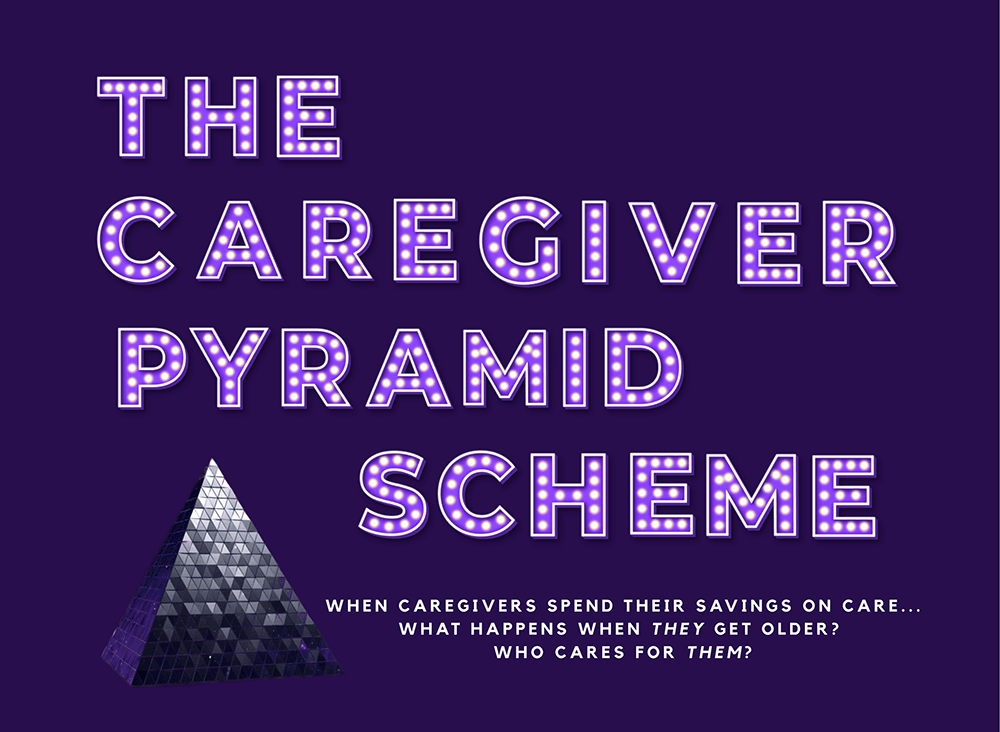
As we grow up and age, the expectation is always that we must earn income, prepare for retirement, have a savings, etc...but what if all of that hard work ends up being used up before we even have time to create safety for ourselves? This is the caregiver pyramid scheme.
Caregiving can drain more than your time. It can drain your money, your retirement, your energy, your health...
As we grow up and age, the expectation is always that we must earn income, prepare for retirement, have a savings, etc...but what if all of that hard work ends up being used up before we even have time to create safety for ourselves?
No one should have to earn twice the amount of those resources. That's insane
A lot of people are taught or assume "my kids will take care of me." But that's not a plan. That's a hope. Even loving kids may not be able to provide care (distance, jobs, health, finances, burnout, complicated family dynamics). Plenty of parents with kids still end up navigating care alone.
I spend my savings and resources to care for my parents. My kids will then spend their resources to care for me. Their kids will then spend their resources to care for them. Their kids' kids will then spend their resources to care for them.
This is the caregiver pyramid scheme.
Even if you don't have kids of your own but happen to be the family member that takes on the role of primary caregiver who has to deplete their resources, there will still come a time where you will need to rely on other family or alternative solutions for yourself.
There are 3 plans you should make for yourself and your future care needs.
- Care Plan: This is the "what would I want if my health changed" plan. It's about preferences and logistics, not just money.
- Name your likely scenarios (pick 1 to start): "If I got sick short-term," "If I needed help at home," "If I couldn't drive," "If I had a hospital stay."
- Write your "care preferences" in plain language (one page):
- Where you'd want to live if you needed help (stay home, move closer to family, assisted living, unknown)
- What you'd want help with first (meals, transportation, meds, bathing, housekeeping)
- What matters most to you (privacy, cultural food, pets, faith, independence, being near friends)
- Make a "care menu" (your future helper cheat sheet):
- Daily needs (meds, meals, mobility)
- Weekly needs (groceries, appointments)
- Monthly needs (refills, bills, admin)
- Document the medical basics:
- Primary care doctor info
- Current meds list
- Allergies
- Conditions
Put it somewhere your future advocate can access quickly
(Hint: FamLove allows you to create a profile for self-care which you can easily share with someone else when the need arises).
Do the 2 high-impact legal/medical docs when you can:
Advance directive (healthcare wishes)
Healthcare power of attorney (who can speak for you)
(Hint: FamLove's Document Drawer allows you to store all your important care docs in one place. Your medical, legal, and emergency documents stay HIPAA-safe, encrypted, and organized so you can access what you need fast).
- Money Plan: This is the "how do I not accidentally sacrifice my entire future" plan. It's boundaries + benefits + visibility.
- Keep Track
- Track caregiving out-of-pocket spending for 30 days...meds, supplies, transportation, food, home modifications, paid help.
- Separate personal accounts from caregiving spend
- Pick a monthly amount you can contribute without blowing up rent, debt payments, or retirement.
- Keep something going: retirement contribution, emergency fund auto-transfer, paying down high-interest debt.
- Look for financial resources before burning through your own:
- Medicaid eligibility (rules vary, but worth checking)
- VA Aid and Attendance (if applicable)
- Local respite programs / Area Agency on Aging
- Nonprofit disease-specific grants
- Hospital social worker resources
- Employer benefits (FMLA, paid leave, EAP)
- Keep Track
- People Plan: This is the "who helps, and how do they actually help" plan. Because most breakdowns happen when no one knows what to do, even when they care. This is also helpful to start talking to the people around you to see who you can rely on within family, friends, or community.
- Pick your Core 3
Even if you don't have 3 people try to think of just one person- Emergency contact (who gets the call)
- Medical backup (who can listen, take notes, help ask questions)
- Paperwork helper (who can help you find info if you're stressed)
- How to start the convo with friends, family or community
- "Could I list you as my emergency contact?"
- "Could I call you if I needed help understanding what a doctor said?"
- "If I had to fill out forms, could I ask you for a second set of eyes?"
- If you don't have people you're close to, you can still build support
- Your primary care clinic's social worker or care manager (ask if they have one)
- Local Area Agency on Aging
- Faith community contact
- Neighbor you trust for small favors
- A paid option for limited tasks (even a few hours a month later)
- Community groups
- Caregiver support groups
- Disease-specific orgs
- Pick your Core 3
Caregivers need care plans too. If you feel scared or unsure about your own future, you are not alone.
Try to start planning using the tips in this post and remember...you are not selfish for thinking about your future.
Download FamLove today, and see how we can help care for you and your loved ones!
Free Caregiving Toolkits
Free interactive tools to help you plan, coordinate and manage care.
 Caregiver Burnout ToolkitUnderstand how caregiving is affecting 7 areas of your life and get a personalized action plan with real resources.
 Long-Term Care Planning ToolkitEstimate care costs in your state, assess your planning readiness, and create a personalized financial plan.
 My Future Care PlanDocument care preferences, identify your support people, and prepare for future care needs.
 Emergency Care ProfileOrganize medical info, contacts, and medications in one place. Includes a printable wallet card.
 Care Billing NavigatorReview medical bills for errors, understand your rights, and get step-by-step guidance to dispute or reduce what you owe.